
KEEPING OUR FOOD FRESH:
SAFE, QUALITY, SUSTAINABLE PACKAGING.
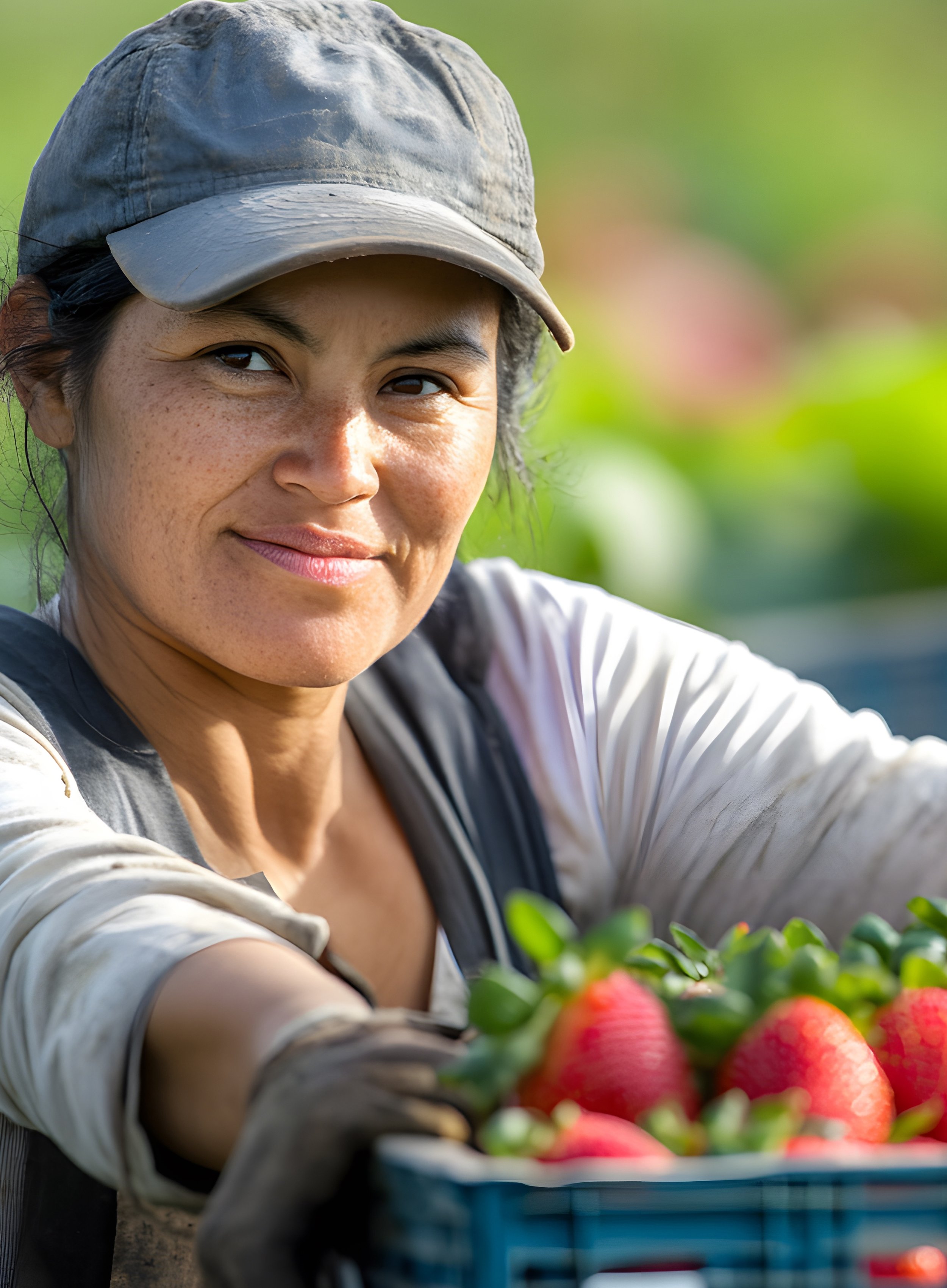
The packaging made specifically for produce, proteins, and the larger food supply chain keeps Californians safe and able to enjoy fresh food at an affordable cost.
With the right investments in rational policy and sound science, this packaging can be fully integrated into a circular economy, sustainably maintaining our access to fresh food.
Eliminating this safe and affordable packaging will have real and serious environmental and human health consequences. The right, recyclable packaging reduces waste, protects public health, and can lower the overall environmental footprint.
Why Packaging Matters
Protects food against contamination and cross-contact risks
Controls moisture and airflow to significantly slow spoilage and extend shelf life
Supports the cold supply chain for longer routes—an important characteristic given food grown in California fields is supplied to communities across North America
Design flexibility for recyclability, which can be recycled in a loop
How Packaging Matters - By the Numbers
Plastic packaging that prevents just 10% of food from spoiling nets a Greenhouse Gas (GHG) benefit that is at least 5× larger than the emissions from producing the packaging itself.*
In 2021, U.S. surplus wasted food was ~380 MMT CO₂e (roughly 6% of all U.S. GHGs). Preventing waste with better packaging reduces emissions from food waste. **
According to data from the U.S. Environmental Protection Agency, the global social cost of GHG emissions from food waste for the single year of 2023 was $47 billion. Since GHG emissions are released every year as a result of surplus food, those social costs cumulatively reach $571 billion over 10 years.**
Food loss/waste contributes ~8–10% of global GHGs. Cutting waste is one of the fastest ways to reduce climate impact.***
*(“The impact of plastics on life cycle energy consumption and greenhouse gas emissions in Europe” produced by Denkstatt and published in July 2010. Available at: https://www.symphonyenvironmental.com/wp-content/uploads/2024/02/Denkstatt-Report-July-2011.pdf)
** ReFED+1
***UNFCCC+1
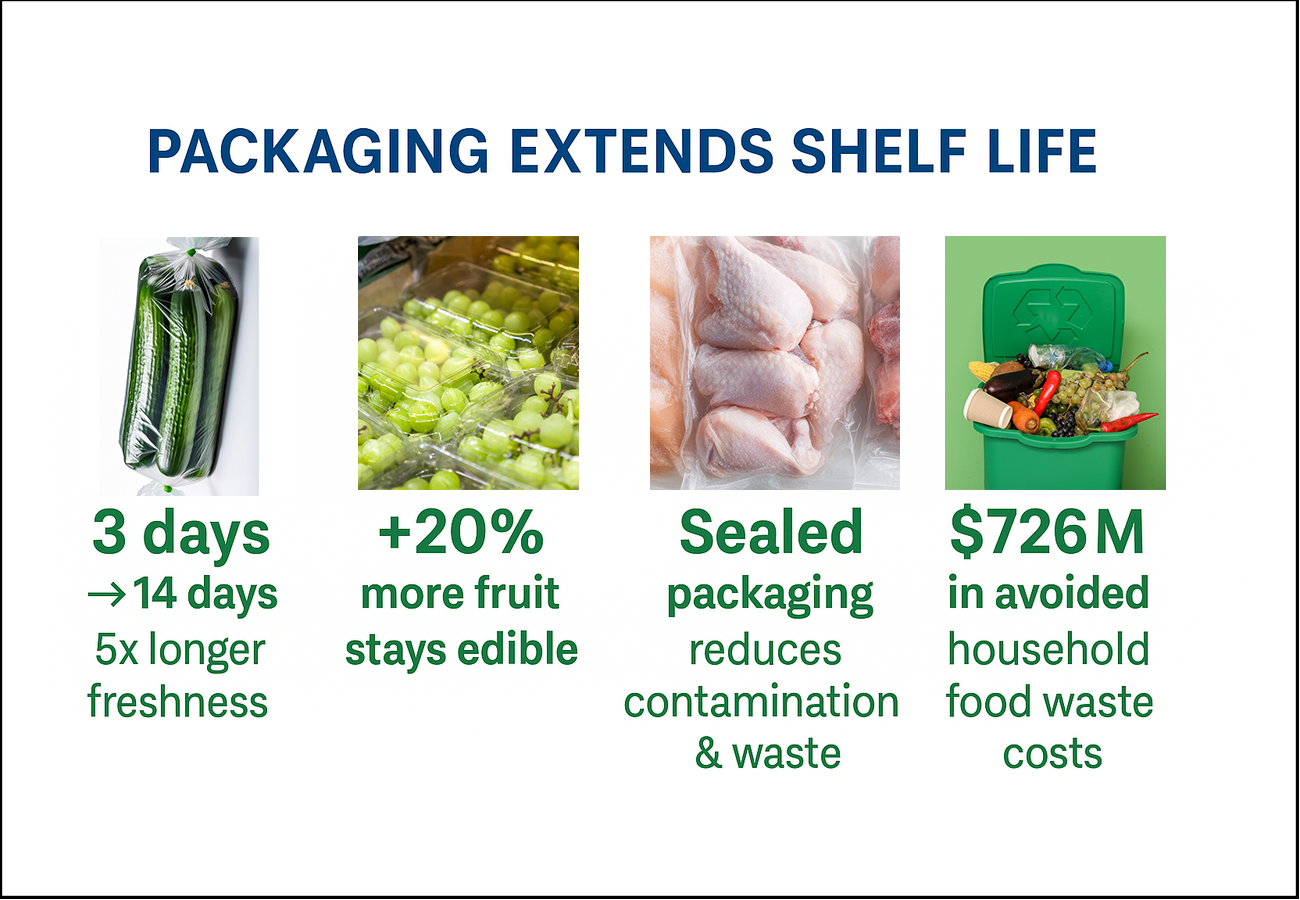
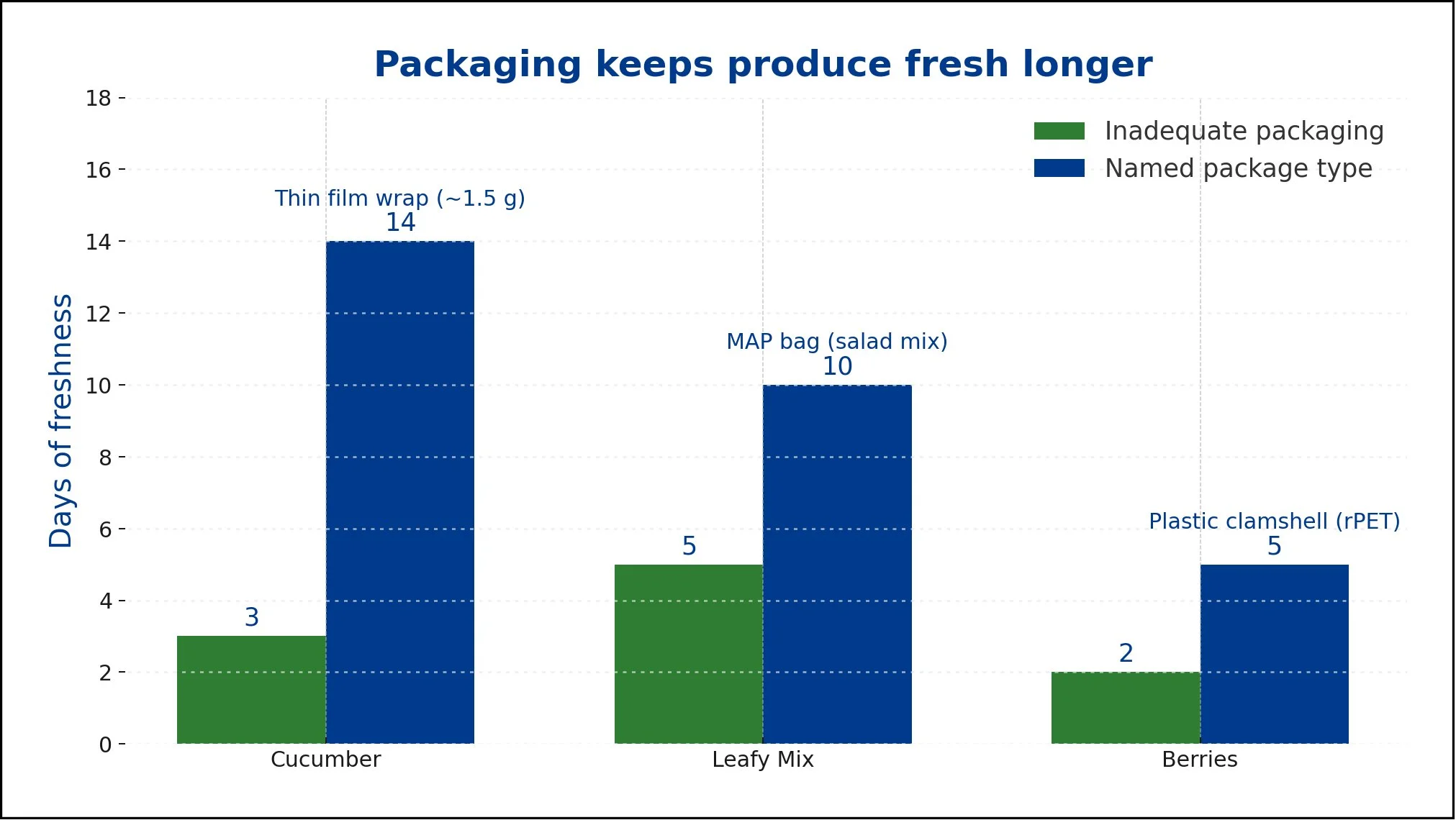
Cucumbers: shelf life extends from 3 days → 14 days because of thin wrap. (5-fold increase preventing spoilage)
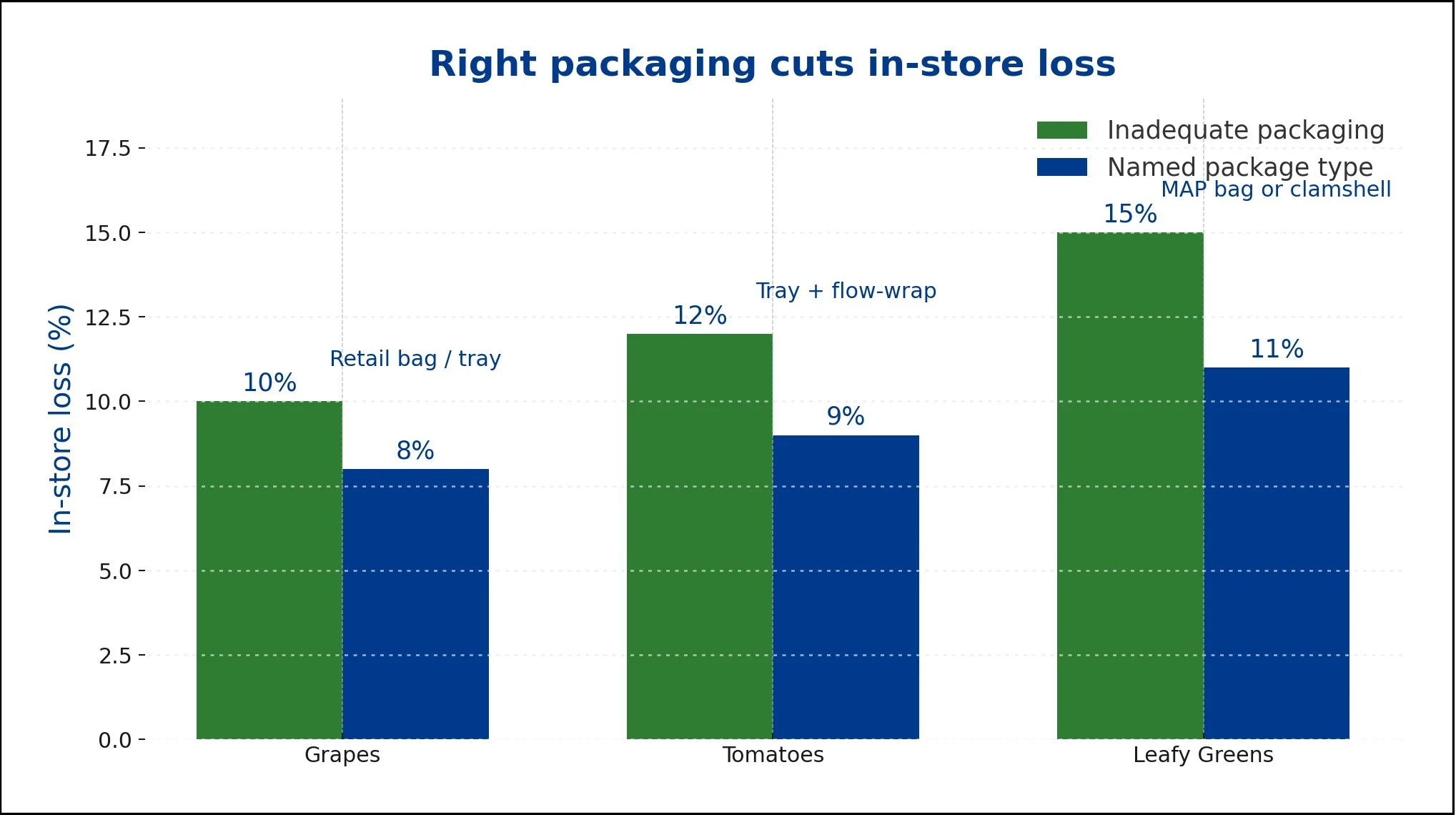
Grapes: 20% lower spoilage in plastic packaging than inadequate alternatives.
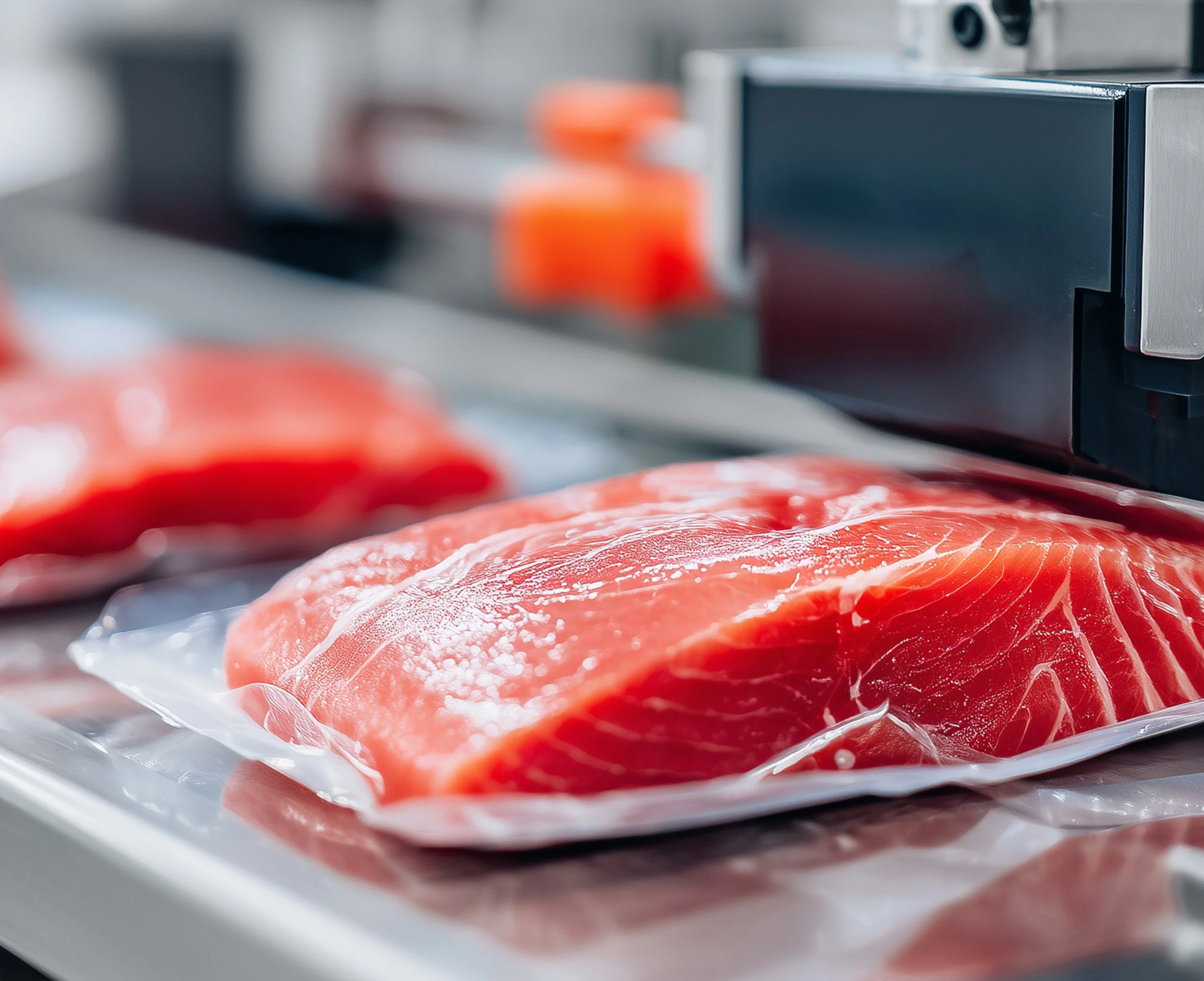
Fresh proteins: sealed, puncture-resistant, oxygen-barrier packaging keeps out contamination and reduces exposure to air that lets pathogens multiply, significantly reducing foodborne-illness risk and food waste.
Economic Consequences of Packaging for California: ______________________________________
A 20% uptick in food waste would add about $726M in consumer costs.